
Build Coordination Systems Beyond Information
Big Tech built empires on information. The future will be built on coordination.
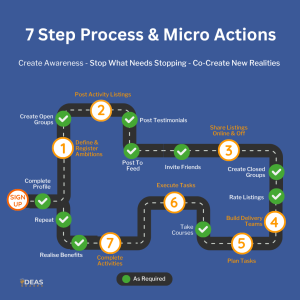
People who care about this issue are not always connected. This space exists to bring those concerned together so they can act collectively. If you are negatively impacted, or if this resonates, and you want to help, have experience or ideas to move this activity forward, then get involved. This isn't a petition or a one-click action. It's an invitation to participate — to help diagnose what's wrong, decide what needs doing, find others who agree, and work together until something real changes. We'll show you how below. Check the Act Now section for simple next steps you can take now. All listings remain active until outcomes are delivered or the listing is no longer required.
Log in to rate this issue and help influence change.
Activity Listing Details
Ambition
To highlight the fundamental difference between information access and real-world outcomes, and to position coordinated human action as the next critical layer of global infrastructure.
Ambition Type
Personal, Community, Social, Business, Economic, Technological
Level
PL5 - Global Participation
Goal
Make Others Aware, Co-Create New Realities
Audience
General Public, Students, Young People (16-25), Parent & Carers, Retired People, Engaged Citizens, Community Leaders & Volunteers, Activists & Advocates
Situation
For the last 20 years, Big Tech has dominated the digital world.
Platforms like social media networks and search engines built their value on one core principle:
Control access to information.
If you wanted to know something, see something, or share something, you went through them.
But that model is now being disrupted.
Artificial Intelligence can now:
– Summarise vast amounts of information instantly
– Generate content without relying on social feeds
– Answer questions without requiring search engines
– Personalise outputs without needing large networks
In simple terms:
– People no longer need to scroll to learn.
And that creates a problem for platforms built on attention.
Platforms like social media networks and search engines built their value on one core principle:
Control access to information.
If you wanted to know something, see something, or share something, you went through them.
But that model is now being disrupted.
Artificial Intelligence can now:
– Summarise vast amounts of information instantly
– Generate content without relying on social feeds
– Answer questions without requiring search engines
– Personalise outputs without needing large networks
In simple terms:
– People no longer need to scroll to learn.
And that creates a problem for platforms built on attention.
Article
The Misunderstanding
This shift assumes something critical:
– That the internet is primarily about information consumption.
And for a long time, it was.
But information alone does not change anything.
Knowing about a problem does not solve it
Reading about an idea does not implement it
Agreeing with others does not create outcomes
AI can accelerate understanding.
It cannot deliver real-world change.
The Missing Layer: Coordination
If information is no longer scarce, then its value drops.
What becomes scarce instead?
– Coordinated action.
Real change requires:
– People aligning around a shared ambition
– Clear structure for moving from idea to execution
– Tasks being distributed and completed
– Outcomes being delivered and measured
This is not a data problem.
This is a coordination problem.
And coordination has never had true global infrastructure.
Until now.
From Information Economy to Coordination Economy
We are moving through three distinct phases:
1. Information Economy
Search, social media, and content platforms dominate.
2. AI Economy
Information becomes abundant, instant, and personalised.
3. Coordination Economy (Next Phase)
People organise, act, and deliver outcomes at scale.
Big Tech thrives in phases 1 and 2.
But phase 3 requires something entirely different.
Why AI Cannot Replace This
AI can:
– Suggest ideas
– Generate plans
– Simulate outcomes
But it cannot:
– Commit to action
– Take responsibility
– Coordinate human effort across real-world systems
– Deliver physical, societal, or organisational change
AI supports.
People deliver.
Where Infrastructure Changes Everything
To move from thinking to doing, you need:
– A shared space to align people
– A structured process to move from ambition to outcome
– Visibility of what matters most
– Mechanisms to prioritise and act collectively
This is where coordination infrastructure comes in.
Not another social platform.
Not another content feed.
But a system designed specifically for:
– Turning ambition into measurable results.
What This Means for the Future
As AI reduces the need for traditional networks:
– Attention-based platforms weaken
– Content volume increases but impact decreases
– Passive consumption becomes less valuable
At the same time:
– Demand for real outcomes increases
– Frustration with inaction grows
– People look for ways to actually change things
This creates a shift:
– From watching the world
– To shaping the world
The Opportunity
The next dominant layer of the internet will not be:
– Social
– Search
– Content
It will be:
– Coordination
The ability for people, groups, and organisations to:
– Come together
– Focus on what matters
– Take structured action
– Deliver real-world outcomes
At scale.
Call to Action
If information is no longer the bottleneck…
What is?
Action. Coordination. Delivery.
Start there.
Choose something that matters to you.
Find others who care.
And take the first step toward making it happen.
If AI removes the need to search and scroll…
then the only question left is:
- Who is actually going to do something about what matters?
This shift assumes something critical:
– That the internet is primarily about information consumption.
And for a long time, it was.
But information alone does not change anything.
Knowing about a problem does not solve it
Reading about an idea does not implement it
Agreeing with others does not create outcomes
AI can accelerate understanding.
It cannot deliver real-world change.
The Missing Layer: Coordination
If information is no longer scarce, then its value drops.
What becomes scarce instead?
– Coordinated action.
Real change requires:
– People aligning around a shared ambition
– Clear structure for moving from idea to execution
– Tasks being distributed and completed
– Outcomes being delivered and measured
This is not a data problem.
This is a coordination problem.
And coordination has never had true global infrastructure.
Until now.
From Information Economy to Coordination Economy
We are moving through three distinct phases:
1. Information Economy
Search, social media, and content platforms dominate.
2. AI Economy
Information becomes abundant, instant, and personalised.
3. Coordination Economy (Next Phase)
People organise, act, and deliver outcomes at scale.
Big Tech thrives in phases 1 and 2.
But phase 3 requires something entirely different.
Why AI Cannot Replace This
AI can:
– Suggest ideas
– Generate plans
– Simulate outcomes
But it cannot:
– Commit to action
– Take responsibility
– Coordinate human effort across real-world systems
– Deliver physical, societal, or organisational change
AI supports.
People deliver.
Where Infrastructure Changes Everything
To move from thinking to doing, you need:
– A shared space to align people
– A structured process to move from ambition to outcome
– Visibility of what matters most
– Mechanisms to prioritise and act collectively
This is where coordination infrastructure comes in.
Not another social platform.
Not another content feed.
But a system designed specifically for:
– Turning ambition into measurable results.
What This Means for the Future
As AI reduces the need for traditional networks:
– Attention-based platforms weaken
– Content volume increases but impact decreases
– Passive consumption becomes less valuable
At the same time:
– Demand for real outcomes increases
– Frustration with inaction grows
– People look for ways to actually change things
This creates a shift:
– From watching the world
– To shaping the world
The Opportunity
The next dominant layer of the internet will not be:
– Social
– Search
– Content
It will be:
– Coordination
The ability for people, groups, and organisations to:
– Come together
– Focus on what matters
– Take structured action
– Deliver real-world outcomes
At scale.
Call to Action
If information is no longer the bottleneck…
What is?
Action. Coordination. Delivery.
Start there.
Choose something that matters to you.
Find others who care.
And take the first step toward making it happen.
If AI removes the need to search and scroll…
then the only question left is:
- Who is actually going to do something about what matters?
Outcomes
If this shift is understood and acted upon, the following improvements become possible:
1. Clear Separation Between Information and Action
People begin to recognise that consuming content is not the same as creating change. This reduces passive behaviour and increases intentional participation.
2. Reduced Dependence on Traditional Platforms
As AI replaces the need to search and scroll, individuals and organisations rely less on attention-based networks and more on outcome-focused environments.
3. Increased Focus on What Actually Matters
Instead of being pulled into endless feeds, people direct their time and energy toward specific ambitions, problems, and opportunities that require action.
4. Emergence of Structured Collaboration at Scale
Individuals, groups, and organisations begin working together in a coordinated way, rather than operating in isolation or fragmented discussions.
5. Faster Transition from Idea to Execution
With the right structure in place, ideas move quickly into plans, tasks, and delivery, reducing the gap between intention and outcome.
6. Visibility of Real Priorities
Through collective input and participation, the most important issues naturally rise to the surface, allowing effort to be focused where it is most needed.
7. Tangible, Measurable Results
Progress is no longer theoretical. Activities lead to completed actions, delivered outcomes, and visible improvements across personal, professional, and societal areas.
8. A Shift Toward a Coordination-Based Economy
Value begins to move away from attention and information, and toward the ability to organise, align, and deliver outcomes with others.
1. Clear Separation Between Information and Action
People begin to recognise that consuming content is not the same as creating change. This reduces passive behaviour and increases intentional participation.
2. Reduced Dependence on Traditional Platforms
As AI replaces the need to search and scroll, individuals and organisations rely less on attention-based networks and more on outcome-focused environments.
3. Increased Focus on What Actually Matters
Instead of being pulled into endless feeds, people direct their time and energy toward specific ambitions, problems, and opportunities that require action.
4. Emergence of Structured Collaboration at Scale
Individuals, groups, and organisations begin working together in a coordinated way, rather than operating in isolation or fragmented discussions.
5. Faster Transition from Idea to Execution
With the right structure in place, ideas move quickly into plans, tasks, and delivery, reducing the gap between intention and outcome.
6. Visibility of Real Priorities
Through collective input and participation, the most important issues naturally rise to the surface, allowing effort to be focused where it is most needed.
7. Tangible, Measurable Results
Progress is no longer theoretical. Activities lead to completed actions, delivered outcomes, and visible improvements across personal, professional, and societal areas.
8. A Shift Toward a Coordination-Based Economy
Value begins to move away from attention and information, and toward the ability to organise, align, and deliver outcomes with others.
Act Now
Join Ideas-Shared, Rate Listing, Share Listing
Status
At Step 3 - Sharing Only
Map Reference
Address
San Jose, Santa Clara County, California, United States
San Jose, Santa Clara County, California, United States
Interest Areas
Media
Contact Details
Website