
Define and Deliver the Future Direction of the UK
Define the Direction. Reset the Vision. Shape the Future.
People who care about this issue are not always connected. This space exists to bring those concerned together so they can act collectively. If you are negatively impacted, or if this resonates, and you want to help, have experience or ideas to move this activity forward, then get involved. We’ll show you how below. Check the Act Now section below for simple next steps you can take now. Note: All listings remain active until outcomes are either delivered or the listing is no longer required.
Log in to rate this issue and help influence change.
Activity Listing Details
Ambition
To define a clear, shared direction for the United Kingdom by gathering public perspectives on national priorities, long-term goals, and the kind of country people want to build over the next decade.
Ambition Type
Personal, Community, Cultural, Social, Business, Financial, Economic, Political, Environmental, Spiritual
Level
PL5 - Global Participation
Goal
Make Others Aware, Stop What Needs Stopping, Co-Create New Realities
Audience
General Public, Students, Young People (16-25), Parent & Carers, Retired People, Engaged Citizens, Community Leaders & Volunteers, Activists & Advocates, Faith & Cultural Leaders, Civil Servants, Local Government (Councillors & Officers), Politicians & Policy Professionals, Public Service Workers (Police, Fire, Social Care etc.), Healthcare Professionals, Educators & Academics, Business Owners & Entrepreneurs, Professionals & Specialists, Trades & Skilled Workers, Creatives & Media, Technologists & Engineers, Researchers & Analysts
Situation
The United Kingdom is experiencing a period of political, economic, and social uncertainty.
Public confidence in direction, leadership, and long-term planning appears increasingly fragmented. Many people feel disconnected from decision-making and unclear about where the country is heading.
Debates often focus on short-term pressures - cost of living, public services, taxation - without a shared understanding of long-term national priorities.
At the same time, traditional political divisions are weakening, and there is no single, widely accepted vision for the future.
This creates both a challenge and an opportunity.
There is a growing need to step back and ask a more fundamental question:
What kind of country do people actually want the UK to become?
This includes consideration of:
– Economic priorities (growth, fairness, stability)
– Public service expectations (NHS, education, infrastructure)
– The role of government vs markets
– National identity and global positioning
– Political reform and trust in institutions
Public confidence in direction, leadership, and long-term planning appears increasingly fragmented. Many people feel disconnected from decision-making and unclear about where the country is heading.
Debates often focus on short-term pressures - cost of living, public services, taxation - without a shared understanding of long-term national priorities.
At the same time, traditional political divisions are weakening, and there is no single, widely accepted vision for the future.
This creates both a challenge and an opportunity.
There is a growing need to step back and ask a more fundamental question:
What kind of country do people actually want the UK to become?
This includes consideration of:
– Economic priorities (growth, fairness, stability)
– Public service expectations (NHS, education, infrastructure)
– The role of government vs markets
– National identity and global positioning
– Political reform and trust in institutions
Outcomes
If successful, this could lead to:
– A clearer picture of shared public priorities
– Greater alignment between public expectations and policy direction
– More informed and constructive national debate
– Identification of common ground across different groups
– A foundation for long-term strategic planning
– A clearer picture of shared public priorities
– Greater alignment between public expectations and policy direction
– More informed and constructive national debate
– Identification of common ground across different groups
– A foundation for long-term strategic planning
Act Now
Add Review, Join Discussion Group, Join Ideas-Shared, Rate Listing, Share Listing
In Group
Participants will focus on defining the UK’s future direction. Activity may include:
- Identifying the most important national priorities
- Exploring different economic and social models
- Discussing trade-offs between growth, fairness, and sustainability
- Examining expectations of public services and government
- Defining what “success” looks like for the UK in 10–20 years
- Comparing international approaches and lessons
- Highlighting gaps between public expectations and current policy
- Building a shared vision framework to inform future decisions
- Identifying the most important national priorities
- Exploring different economic and social models
- Discussing trade-offs between growth, fairness, and sustainability
- Examining expectations of public services and government
- Defining what “success” looks like for the UK in 10–20 years
- Comparing international approaches and lessons
- Highlighting gaps between public expectations and current policy
- Building a shared vision framework to inform future decisions
Status
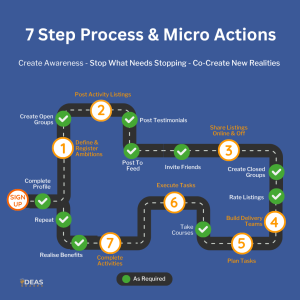
At Step 3 - Group Engagement
Map Reference
Address
Birmingham, West Midlands, England, United Kingdom
Birmingham, West Midlands, England, United Kingdom
Interest Areas
Links
Public Group Link
Contact Details
Website