
Define What Is Compatible in UK Society
People who care about this issue are not always connected. This space exists to bring those concerned together so they can act collectively. If you are negatively impacted, or if this resonates, and you want to help, have experience or ideas to move this activity forward, then get involved. We’ll show you how below. Check the Act Now section below for simple next steps you can take now. Note: All listings remain active until outcomes are either delivered or the listing is no longer required.
Log in to rate this issue and help influence change.
Activity Listing Details
Ambition
To challenge the assumption that all cultural practices can coexist without friction, and to push for honest discussion about compatibility, standards, and what is required to live together in the UK.
Ambition Type
Community, Cultural, Social, Economic, Political, Environmental
Level
PL4 - National Participation
Goal
Make Others Aware, Co-Create New Realities
Audience
General Public, Students, Young People (16-25), Parent & Carers, Retired People, Engaged Citizens, Community Leaders & Volunteers, Activists & Advocates, Faith & Cultural Leaders, Local Government (Councillors & Officers), Politicians & Policy Professionals, Public Service Workers (Police, Fire, Social Care etc.)
Situation
The UK is a multicultural country.
That is a reality.
But there is a growing reluctance to say something equally important:
👉 not all ways of living are compatible in practice.
When people live side by side, differences don’t stay theoretical.
They show up in:
- behaviour
- expectations
- how people treat each other
- what is considered acceptable
THE POINT
This is not about background, identity, or belief.
👉 It is about what happens in real life.
If behaviours clash in ways that:
- undermine safety
- create tension
- or break the law
then they are not compatible with living together peacefully.
THE PROBLEM
We avoid saying this clearly.
Instead:
- issues are softened
- concerns are dismissed
- difficult conversations are avoided
- wrong parties are blamed
This doesn’t solve anything.
👉 It allows problems to grow.
WHY THIS MATTERS
If we continue to pretend everything is compatible:
- trust will continue to fall
- tensions will increase
- divisions will deepen
- violence will increase
- costs will increase exponentially
And people will feel that reality cannot be discussed honestly.
THE POSITION
A diverse society can work.
But only if there is clarity on:
👉 what is acceptable
👉 what is not
👉 and what is expected of everyone
Without that, diversity becomes fragmentation and a free-for-all that is nothing short of chaos.
That is a reality.
But there is a growing reluctance to say something equally important:
👉 not all ways of living are compatible in practice.
When people live side by side, differences don’t stay theoretical.
They show up in:
- behaviour
- expectations
- how people treat each other
- what is considered acceptable
THE POINT
This is not about background, identity, or belief.
👉 It is about what happens in real life.
If behaviours clash in ways that:
- undermine safety
- create tension
- or break the law
then they are not compatible with living together peacefully.
THE PROBLEM
We avoid saying this clearly.
Instead:
- issues are softened
- concerns are dismissed
- difficult conversations are avoided
- wrong parties are blamed
This doesn’t solve anything.
👉 It allows problems to grow.
WHY THIS MATTERS
If we continue to pretend everything is compatible:
- trust will continue to fall
- tensions will increase
- divisions will deepen
- violence will increase
- costs will increase exponentially
And people will feel that reality cannot be discussed honestly.
THE POSITION
A diverse society can work.
But only if there is clarity on:
👉 what is acceptable
👉 what is not
👉 and what is expected of everyone
Without that, diversity becomes fragmentation and a free-for-all that is nothing short of chaos.
How To Help
- Share this to bring the issue into open discussion
- Keep the focus on behaviour, not identity or background
- Be specific about where compatibility breaks down in real life
- Use real examples, not generalisations or assumptions
- Call out avoidance, denial, or deflection when it blocks progress
- Do not allow the discussion to turn into personal attacks or group blame
- Identify behaviours that create tension, risk, or conflict
- Separate lawful behaviour from unlawful behaviour clearly
- Push for clear, consistent standards that apply to everyone
- Bring in people with experience in law, policy, and community work
- Turn specific issues into structured activity listings
- Focus on defining standards and outcomes, not winning arguments
- Keep the focus on behaviour, not identity or background
- Be specific about where compatibility breaks down in real life
- Use real examples, not generalisations or assumptions
- Call out avoidance, denial, or deflection when it blocks progress
- Do not allow the discussion to turn into personal attacks or group blame
- Identify behaviours that create tension, risk, or conflict
- Separate lawful behaviour from unlawful behaviour clearly
- Push for clear, consistent standards that apply to everyone
- Bring in people with experience in law, policy, and community work
- Turn specific issues into structured activity listings
- Focus on defining standards and outcomes, not winning arguments
Outcomes
1. Publish a Clear UK Standard for Living Together: A simple, publicly accessible set of expectations defining:
- what is acceptable behaviour
- what is not
- what is expected of everyone
👉 No ambiguity. No grey areas.
2. Apply the Same Standards to Everyone: Consistent enforcement of laws and behavioural expectations regardless of:
- background
- belief
- identity
👉 One standard. No exceptions.
3. Define Non-Negotiable Boundaries: Clear identification of behaviours that are not compatible with living in UK society, including:
- actions that undermine safety
- actions that break the law
- actions that create intimidation or division
👉 Clarity replaces uncertainty.
4. Link Standards to Consequences: Transparent and consistent consequences for behaviour that breaches defined standards.
👉 Expectations mean nothing without enforcement.
5. Remove Ambiguity in Public Messaging:
Government, institutions, and public bodies communicate:
- clearly
- consistently
- without contradiction
👉 No mixed signals.
6. Enable Open Discussion Without Suppression:
People can raise concerns about behaviour and compatibility:
- without being dismissed
- without being labelled
- without avoidance
👉 Issues are addressed, not buried.
7. Strengthen Social Cohesion Through Clarity: A shared understanding of expectations leads to:
- reduced tension
- increased trust
- greater stability
👉 People know where they stand.
8. Shift from Assumption to Defined Reality: Move from:
❌ “everyone assumes what is acceptable”
to:
👉 “everyone understands what is expected”
A society cannot function on assumptions. It requires clear standards, applied consistently, to everyone.
- what is acceptable behaviour
- what is not
- what is expected of everyone
👉 No ambiguity. No grey areas.
2. Apply the Same Standards to Everyone: Consistent enforcement of laws and behavioural expectations regardless of:
- background
- belief
- identity
👉 One standard. No exceptions.
3. Define Non-Negotiable Boundaries: Clear identification of behaviours that are not compatible with living in UK society, including:
- actions that undermine safety
- actions that break the law
- actions that create intimidation or division
👉 Clarity replaces uncertainty.
4. Link Standards to Consequences: Transparent and consistent consequences for behaviour that breaches defined standards.
👉 Expectations mean nothing without enforcement.
5. Remove Ambiguity in Public Messaging:
Government, institutions, and public bodies communicate:
- clearly
- consistently
- without contradiction
👉 No mixed signals.
6. Enable Open Discussion Without Suppression:
People can raise concerns about behaviour and compatibility:
- without being dismissed
- without being labelled
- without avoidance
👉 Issues are addressed, not buried.
7. Strengthen Social Cohesion Through Clarity: A shared understanding of expectations leads to:
- reduced tension
- increased trust
- greater stability
👉 People know where they stand.
8. Shift from Assumption to Defined Reality: Move from:
❌ “everyone assumes what is acceptable”
to:
👉 “everyone understands what is expected”
A society cannot function on assumptions. It requires clear standards, applied consistently, to everyone.
Act Now
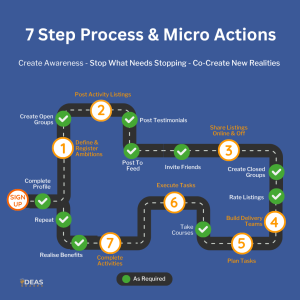
Add Review, Join Ideas-Shared, Rate Listing, Share Listing
Status
At Step 3 - Sharing Only
Map Reference
Address
Greater London, England, United Kingdom
Greater London, England, United Kingdom
Interest Areas
Contact Details
Website