Move Beyond Left vs Right and Build Real Solutions
If power keeps changing hands, but nothing improves… who’s really winning?
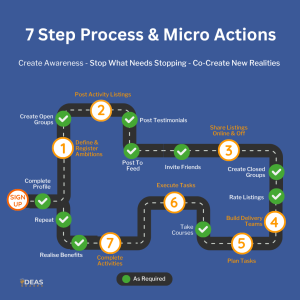
People who care about this issue are not always connected. This space exists to bring those concerned together so they can act collectively. If you are negatively impacted, or if this resonates, and you want to help, have experience or ideas to move this activity forward, then get involved. This isn't a petition or a one-click action. It's an invitation to participate — to help diagnose what's wrong, decide what needs doing, find others who agree, and work together until something real changes. We'll show you how below. Check the Act Now section for simple next steps you can take now. All listings remain active until outcomes are delivered or the listing is no longer required.
Log in to rate this issue and help influence change.
Activity Listing Details
Ambition
To challenge the effectiveness of Left vs Right politics in delivering meaningful change, and to enable people to come together to fix the real-world problems that continue regardless of who is in power.
Ambition Type
Personal, Community, Cultural, Social, Business, Financial, Economic, Political, Environmental
Level
PL5 - Global Participation
Goal
Make Others Aware, Stop What Needs Stopping, Co-Create New Realities
Audience
General Public, Students, Young People (16-25), Parent & Carers, Retired People, Engaged Citizens, Community Leaders & Volunteers, Activists & Advocates, Faith & Cultural Leaders, Politicians & Policy Professionals, Public Service Workers (Police, Fire, Social Care etc.), Healthcare Professionals, Educators & Academics, Business Owners & Entrepreneurs, Professionals & Specialists, Trades & Skilled Workers
Situation
Every few years, we’re told this is the one.
The election that will change everything.
One side wins.
The other loses.
And then…
Prices still rise
Housing is still out of reach
Wages still struggle to keep up
Public services remain under pressure
Debt continues to grow
So what exactly changed?
The election that will change everything.
One side wins.
The other loses.
And then…
Prices still rise
Housing is still out of reach
Wages still struggle to keep up
Public services remain under pressure
Debt continues to grow
So what exactly changed?
Article
The Misunderstanding
The entire UK political system assumes something: that progress comes from choosing the right side.
Left or Right.
This party or that party.
This manifesto or that one.
But real life tells a different story.
We’ve seen different governments.
Different policies.
Different promises.
And yet, the same core problems persist.
Not because people don’t care.
But because:
– Arguing about sides is not the same as fixing problems
– What People Actually Experience
This isn’t theoretical.
It’s everyday life.
– A working family gets a pay rise — and loses it to rent, food, and energy.
– A young couple both working full time still can’t afford a home.
– A small business sees costs rise faster than revenue and has no room to absorb it.
– A pensioner watches their purchasing power fall year after year.
People are not imagining this.
They are living it.
And it continues regardless of which side is in power.
The Pattern
Look at what happens over time:
– One party wins → promises change
– Policies shift → messaging resets
– Another party wins → direction changes again
But underneath it all:
– Housing remains constrained
– Costs remain high
– Systems remain complex
– Outcomes remain limited
So the question becomes unavoidable:
If the same problems remain whoever wins… what is the argument actually solving?
Who Really Wins?
Not the public.
Not in any meaningful, consistent way.
The real advantage goes to those who are least affected by political rotation:
– Those with assets, such as property and investments that hold or grow value over time
– Those with scale, including large organisations that can absorb change and pass on costs
– Those inside complex systems who understand how to navigate regulation, finance, and policy
– Those who can wait and operate through cycles of delay
Who Loses?
– The people who need things to actually work.
– Individuals relying on wages
– Families managing rising costs
– Young people trying to build a future
– Small businesses operating with thin margins
– Communities needing coordinated change
Because for them:
– Delay is not neutral — it has consequences
The Deeper Truth
This isn’t about one side being right and the other wrong.
It’s about a structural limitation.
Politics is designed around:
– Competition
– Opposition
– Winning
But real-world problems require:
– Alignment
– Coordination
– Execution
That mismatch is the issue.
What This Means
If your life does not materially improve when power changes hands…
Then you are not on the winning side of the argument.
And more importantly:
– The argument itself does not deliver the outcomes people actually need
A Different Way Forward
The question is not:
“Which side should be in charge?”
The question should be:
– What needs fixing?
– Who is willing to help?
– What actions will actually move this forward?
Because:
– Real progress comes from coordinated action, not ideological positioning
Call to Action
If you’re tired of the same problems continuing while the argument never ends:
– Stop focusing on sides.
– Start focusing on outcomes.
Choose something that matters to you.
Find others who care.
And take the first step toward fixing it.
Because until that happens…
It won’t matter who wins.
So?
Who will you be voting for?
Labour?
The Conservatives?
Liberal Democrats?
Plaid Cymru?
Reform?
The SDP?
Restore Britain?
Or someone else?
Consider… what is actually going to change once reality kicks in?
The entire UK political system assumes something: that progress comes from choosing the right side.
Left or Right.
This party or that party.
This manifesto or that one.
But real life tells a different story.
We’ve seen different governments.
Different policies.
Different promises.
And yet, the same core problems persist.
Not because people don’t care.
But because:
– Arguing about sides is not the same as fixing problems
– What People Actually Experience
This isn’t theoretical.
It’s everyday life.
– A working family gets a pay rise — and loses it to rent, food, and energy.
– A young couple both working full time still can’t afford a home.
– A small business sees costs rise faster than revenue and has no room to absorb it.
– A pensioner watches their purchasing power fall year after year.
People are not imagining this.
They are living it.
And it continues regardless of which side is in power.
The Pattern
Look at what happens over time:
– One party wins → promises change
– Policies shift → messaging resets
– Another party wins → direction changes again
But underneath it all:
– Housing remains constrained
– Costs remain high
– Systems remain complex
– Outcomes remain limited
So the question becomes unavoidable:
If the same problems remain whoever wins… what is the argument actually solving?
Who Really Wins?
Not the public.
Not in any meaningful, consistent way.
The real advantage goes to those who are least affected by political rotation:
– Those with assets, such as property and investments that hold or grow value over time
– Those with scale, including large organisations that can absorb change and pass on costs
– Those inside complex systems who understand how to navigate regulation, finance, and policy
– Those who can wait and operate through cycles of delay
Who Loses?
– The people who need things to actually work.
– Individuals relying on wages
– Families managing rising costs
– Young people trying to build a future
– Small businesses operating with thin margins
– Communities needing coordinated change
Because for them:
– Delay is not neutral — it has consequences
The Deeper Truth
This isn’t about one side being right and the other wrong.
It’s about a structural limitation.
Politics is designed around:
– Competition
– Opposition
– Winning
But real-world problems require:
– Alignment
– Coordination
– Execution
That mismatch is the issue.
What This Means
If your life does not materially improve when power changes hands…
Then you are not on the winning side of the argument.
And more importantly:
– The argument itself does not deliver the outcomes people actually need
A Different Way Forward
The question is not:
“Which side should be in charge?”
The question should be:
– What needs fixing?
– Who is willing to help?
– What actions will actually move this forward?
Because:
– Real progress comes from coordinated action, not ideological positioning
Call to Action
If you’re tired of the same problems continuing while the argument never ends:
– Stop focusing on sides.
– Start focusing on outcomes.
Choose something that matters to you.
Find others who care.
And take the first step toward fixing it.
Because until that happens…
It won’t matter who wins.
So?
Who will you be voting for?
Labour?
The Conservatives?
Liberal Democrats?
Plaid Cymru?
Reform?
The SDP?
Restore Britain?
Or someone else?
Consider… what is actually going to change once reality kicks in?
Outcomes
If this issue is recognised and acted upon, the following improvements become possible:
1. Shift Away from Unproductive Political Division
People begin to move beyond constant Left vs Right arguments and focus instead on the real-world issues that require attention and action.
2. Increased Focus on Real-World Problems
Time and energy are redirected toward challenges that directly impact daily life, such as cost of living, housing, public services, and economic stability.
3. Greater Alignment Across Different Perspectives
Individuals with differing political views are able to collaborate where interests overlap, reducing fragmentation and increasing the potential for progress.
4. Stronger Public Influence Through Coordination
Instead of isolated opinions, coordinated groups form around shared ambitions, increasing visibility, leverage, and the ability to influence outcomes.
5. Faster Transition from Discussion to Action
Ideas and frustrations move more quickly into structured plans, tasks, and measurable activity, reducing the gap between awareness and delivery.
6. More Effective Use of Time and Effort
Less time is spent debating positions that lead nowhere, and more time is invested in activities that create tangible progress.
7. Improved Accountability Through Visibility of Outcomes
Focus shifts from promises and messaging to measurable results, making it easier to see what is working and what is not.
8. Empowerment of Individuals, Groups, and Communities
People feel less dependent on political cycles and more capable of contributing directly to change through coordinated action.
9. Reduced Frustration and Public Disengagement
As people begin to see real progress, trust and engagement increase, replacing apathy and frustration with purpose and participation.
10. Foundations for a More Outcome-Focused Society
A gradual shift occurs from identity-driven politics toward a culture that prioritises solving problems and delivering meaningful improvements.
1. Shift Away from Unproductive Political Division
People begin to move beyond constant Left vs Right arguments and focus instead on the real-world issues that require attention and action.
2. Increased Focus on Real-World Problems
Time and energy are redirected toward challenges that directly impact daily life, such as cost of living, housing, public services, and economic stability.
3. Greater Alignment Across Different Perspectives
Individuals with differing political views are able to collaborate where interests overlap, reducing fragmentation and increasing the potential for progress.
4. Stronger Public Influence Through Coordination
Instead of isolated opinions, coordinated groups form around shared ambitions, increasing visibility, leverage, and the ability to influence outcomes.
5. Faster Transition from Discussion to Action
Ideas and frustrations move more quickly into structured plans, tasks, and measurable activity, reducing the gap between awareness and delivery.
6. More Effective Use of Time and Effort
Less time is spent debating positions that lead nowhere, and more time is invested in activities that create tangible progress.
7. Improved Accountability Through Visibility of Outcomes
Focus shifts from promises and messaging to measurable results, making it easier to see what is working and what is not.
8. Empowerment of Individuals, Groups, and Communities
People feel less dependent on political cycles and more capable of contributing directly to change through coordinated action.
9. Reduced Frustration and Public Disengagement
As people begin to see real progress, trust and engagement increase, replacing apathy and frustration with purpose and participation.
10. Foundations for a More Outcome-Focused Society
A gradual shift occurs from identity-driven politics toward a culture that prioritises solving problems and delivering meaningful improvements.
Act Now
Join Ideas-Shared, Rate Listing, Share Listing
Status
At Step 3 - Sharing Only
Map Reference
Address
Sheffield, South Yorkshire, England, United Kingdom
Sheffield, South Yorkshire, England, United Kingdom
Interest Areas
Contact Details
Website