
Realign Systems to Serve People, Not Power
Put People First
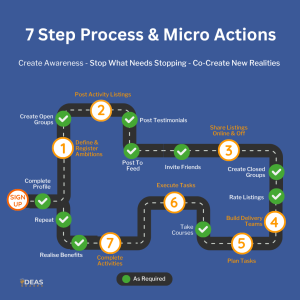
People who care about this issue are not always connected. This space exists to bring those concerned together so they can act collectively. If you are negatively impacted, or if this resonates, and you want to help, have experience or ideas to move this activity forward, then get involved. This isn't a petition or a one-click action. It's an invitation to participate — to help diagnose what's wrong, decide what needs doing, find others who agree, and work together until something real changes. We'll show you how below. Check the Act Now section for simple next steps you can take now. All listings remain active until outcomes are delivered or the listing is no longer required.
Log in to rate this issue and help influence change.
Activity Listing Details
Ambition
To realign political, and economic systems so they act in the interests of the people, deliver measurable improvements in real-world conditions, and stop protecting failure through ideology, weak accountability, and flawed financial design.
Ambition Type
Community, Cultural, Social, Financial, Economic, Political, Environmental
Level
PL5 - Global Participation
Goal
Make Others Aware, Stop What Needs Stopping, Co-Create New Realities
Audience
General Public, Students, Young People (16-25), Retired People, Engaged Citizens, Community Leaders & Volunteers, Activists & Advocates, Faith & Cultural Leaders, Local Government (Councillors & Officers), Politicians & Policy Professionals, Public Service Workers (Police, Fire, Social Care etc.), Educators & Academics, Business Owners & Entrepreneurs, Professionals & Specialists
Situation
Politics and economics are not delivering consistent outcomes for the people they are meant to serve.
Across countries, people are working, contributing, and participating, yet many feel that life is becoming harder rather than easier. Costs continue to rise. Public services remain under pressure. Infrastructure lags behind demand. Economic stability feels fragile.
This is not a temporary issue. It is systemic.
The problem is not a lack of intelligence, effort, or resources. It is that the systems making decisions are not consistently aligned with improving outcomes for people.
WHERE IT IS GOING WRONG
Politics has drifted away from its core purpose.
Decisions are no longer consistently made based on what delivers the best outcomes for people. Instead, they are influenced by ideology, party positioning, power retention, and institutional inertia. Short-term political cycles override long-term thinking, and difficult decisions are often delayed or avoided altogether.
In many democratic systems, this results in slow or inconsistent progress. In more centralised systems, decisions may be faster, but accountability is limited and challenge is restricted. In both cases, the same issue remains: outcomes for people are not reliably improving.
At the same time, over-regulation is creating friction across economies. Housing is delayed, infrastructure takes years to deliver, and businesses face increasing barriers to growth. Systems designed to provide control and oversight are now slowing down delivery and increasing costs.
Investment is also misaligned. Governments speak about growth, but long-term capability is often underfunded or deprioritised. Major projects are delayed, productivity remains weak, and opportunities are missed because political timelines do not match economic reality.
Border control and migration management are another area where systems are not functioning effectively. Migration flows continue to increase due to conflict, economic imbalance, and instability, yet receiving systems are often unprepared or inconsistent in their response. This creates pressure on housing, healthcare, and public services, while the root causes in origin countries remain unresolved.
THE FINANCIAL SYSTEM PROBLEM
The deeper issue sits within the financial and monetary system itself.
In a fiat system, governments are not constrained in the same way as individuals or businesses. The problem is not simply borrowing or spending. It is how money is created, distributed, and interacts with the real economy.
We are seeing expansion of money supply without corresponding increases in productive output. This leads to inflation, which reduces real purchasing power. At the same time, asset prices rise, benefiting those closest to capital, while wages struggle to keep pace with the cost of living.
Central banks such as the Bank of England, Federal Reserve, and European Central Bank adjust interest rates to control inflation and stabilise economies. In practice, however, sustained higher interest rates increase the cost of borrowing for households and businesses, slow economic activity, and add further pressure to everyday life.
The effect is clear. People work more but feel worse off. Businesses find it harder to invest and grow. Economic systems feel extractive rather than supportive.
Access to functional money and a stable financial system is a basic requirement for participation in modern society. When that system reduces purchasing power, increases dependency, or concentrates advantage, it is not functioning as intended.
THE CORE PROBLEM
The world is highly interconnected, but the systems that govern it are not aligned.
Political systems operate within national boundaries. Economic forces operate globally. Financial systems influence both, but are not directly accountable to the people affected by them.
The result is a disconnect.
Decisions are made. Policies are implemented. Money is created and distributed. But the outcomes do not consistently improve the conditions people live in.
This is not a failure of individual actors alone. It is a failure of system design, incentives, and coordination.
WHAT HAS TO CHANGE
Politics must return to a simple standard: delivering measurable improvements in people’s lives. Decisions should be judged on outcomes, not intent or ideology.
Regulation needs to be reviewed and reduced where it blocks delivery. Systems should enable building, investment, and progress, not slow them down unnecessarily.
Investment must be aligned with long-term capability. Infrastructure, productivity, and economic resilience should take priority over short-term political gain.
Border systems need to be clear, enforceable, and coordinated internationally. Migration should be managed in a way that is fair, controlled, and linked to broader economic and geopolitical stability.
Financial systems must be designed to support real-world usefulness. Monetary policy should balance inflation control with the lived reality of households and businesses. Access to capital should support productive activity, not just reinforce existing advantage or prolong indebtedness.
Accountability must become continuous, not periodic. People should be able to see decisions, understand impacts, and challenge direction in a constructive and effective way.
Transparency must apply to all significant influence. Any organisation or network shaping policy should be visible and open to scrutiny.
WHAT THIS LISTING IS FOR
This is a coordination point for people who recognise that issues are not isolated, but systemic, driven by power without any regard for humanity.
It is for those who want to identify where systems are failing, share evidence, propose practical improvements, and work with others to move from discussion to delivery.
This is not about ideology. It is about outcomes. Better outcomes for you and I.
THE BOTTOM LINE
These outcomes are not accidental. They are the result of repeated decisions made by people operating within systems that reward power, control, and short-term stability over long-term outcomes for the public.
Across countries, people are working, contributing, and participating, yet many feel that life is becoming harder rather than easier. Costs continue to rise. Public services remain under pressure. Infrastructure lags behind demand. Economic stability feels fragile.
This is not a temporary issue. It is systemic.
The problem is not a lack of intelligence, effort, or resources. It is that the systems making decisions are not consistently aligned with improving outcomes for people.
WHERE IT IS GOING WRONG
Politics has drifted away from its core purpose.
Decisions are no longer consistently made based on what delivers the best outcomes for people. Instead, they are influenced by ideology, party positioning, power retention, and institutional inertia. Short-term political cycles override long-term thinking, and difficult decisions are often delayed or avoided altogether.
In many democratic systems, this results in slow or inconsistent progress. In more centralised systems, decisions may be faster, but accountability is limited and challenge is restricted. In both cases, the same issue remains: outcomes for people are not reliably improving.
At the same time, over-regulation is creating friction across economies. Housing is delayed, infrastructure takes years to deliver, and businesses face increasing barriers to growth. Systems designed to provide control and oversight are now slowing down delivery and increasing costs.
Investment is also misaligned. Governments speak about growth, but long-term capability is often underfunded or deprioritised. Major projects are delayed, productivity remains weak, and opportunities are missed because political timelines do not match economic reality.
Border control and migration management are another area where systems are not functioning effectively. Migration flows continue to increase due to conflict, economic imbalance, and instability, yet receiving systems are often unprepared or inconsistent in their response. This creates pressure on housing, healthcare, and public services, while the root causes in origin countries remain unresolved.
THE FINANCIAL SYSTEM PROBLEM
The deeper issue sits within the financial and monetary system itself.
In a fiat system, governments are not constrained in the same way as individuals or businesses. The problem is not simply borrowing or spending. It is how money is created, distributed, and interacts with the real economy.
We are seeing expansion of money supply without corresponding increases in productive output. This leads to inflation, which reduces real purchasing power. At the same time, asset prices rise, benefiting those closest to capital, while wages struggle to keep pace with the cost of living.
Central banks such as the Bank of England, Federal Reserve, and European Central Bank adjust interest rates to control inflation and stabilise economies. In practice, however, sustained higher interest rates increase the cost of borrowing for households and businesses, slow economic activity, and add further pressure to everyday life.
The effect is clear. People work more but feel worse off. Businesses find it harder to invest and grow. Economic systems feel extractive rather than supportive.
Access to functional money and a stable financial system is a basic requirement for participation in modern society. When that system reduces purchasing power, increases dependency, or concentrates advantage, it is not functioning as intended.
THE CORE PROBLEM
The world is highly interconnected, but the systems that govern it are not aligned.
Political systems operate within national boundaries. Economic forces operate globally. Financial systems influence both, but are not directly accountable to the people affected by them.
The result is a disconnect.
Decisions are made. Policies are implemented. Money is created and distributed. But the outcomes do not consistently improve the conditions people live in.
This is not a failure of individual actors alone. It is a failure of system design, incentives, and coordination.
WHAT HAS TO CHANGE
Politics must return to a simple standard: delivering measurable improvements in people’s lives. Decisions should be judged on outcomes, not intent or ideology.
Regulation needs to be reviewed and reduced where it blocks delivery. Systems should enable building, investment, and progress, not slow them down unnecessarily.
Investment must be aligned with long-term capability. Infrastructure, productivity, and economic resilience should take priority over short-term political gain.
Border systems need to be clear, enforceable, and coordinated internationally. Migration should be managed in a way that is fair, controlled, and linked to broader economic and geopolitical stability.
Financial systems must be designed to support real-world usefulness. Monetary policy should balance inflation control with the lived reality of households and businesses. Access to capital should support productive activity, not just reinforce existing advantage or prolong indebtedness.
Accountability must become continuous, not periodic. People should be able to see decisions, understand impacts, and challenge direction in a constructive and effective way.
Transparency must apply to all significant influence. Any organisation or network shaping policy should be visible and open to scrutiny.
WHAT THIS LISTING IS FOR
This is a coordination point for people who recognise that issues are not isolated, but systemic, driven by power without any regard for humanity.
It is for those who want to identify where systems are failing, share evidence, propose practical improvements, and work with others to move from discussion to delivery.
This is not about ideology. It is about outcomes. Better outcomes for you and I.
THE BOTTOM LINE
These outcomes are not accidental. They are the result of repeated decisions made by people operating within systems that reward power, control, and short-term stability over long-term outcomes for the public.
How To Help
- Share this with people who recognise that problems are systemic, not isolated
- Bring forward real examples where political or economic decisions fail to improve outcomes
- Be specific about where systems protect failure, delay action, or avoid accountability
Then focus on exposing how the system actually behaves:
- Identify where decisions are driven by power, ideology, or short-term cycles rather than outcomes
- Highlight where regulation blocks delivery rather than enabling it
- Show where financial systems concentrate advantage rather than support participation
- Question where accountability is absent, delayed, or ineffective
Push beyond description into redesign:
- Define what “better outcomes for people” actually means in measurable terms
- Identify where incentives need to change for systems to behave differently
- Explore how accountability could become continuous, not periodic
- Consider how political, economic, and financial systems could be better aligned
Bring the right capability into the conversation:
- People with experience in government, economics, finance, and large-scale systems
- Practitioners who understand how policy translates into real-world outcomes
Turn this into coordinated action:
- Convert systemic issues into specific, structured activity listings
- Focus on changes that can be tested, implemented, and scaled
- Prioritise actions that improve real-world conditions, not just discussion
- Keep pressure on outcomes, not narratives
- Bring forward real examples where political or economic decisions fail to improve outcomes
- Be specific about where systems protect failure, delay action, or avoid accountability
Then focus on exposing how the system actually behaves:
- Identify where decisions are driven by power, ideology, or short-term cycles rather than outcomes
- Highlight where regulation blocks delivery rather than enabling it
- Show where financial systems concentrate advantage rather than support participation
- Question where accountability is absent, delayed, or ineffective
Push beyond description into redesign:
- Define what “better outcomes for people” actually means in measurable terms
- Identify where incentives need to change for systems to behave differently
- Explore how accountability could become continuous, not periodic
- Consider how political, economic, and financial systems could be better aligned
Bring the right capability into the conversation:
- People with experience in government, economics, finance, and large-scale systems
- Practitioners who understand how policy translates into real-world outcomes
Turn this into coordinated action:
- Convert systemic issues into specific, structured activity listings
- Focus on changes that can be tested, implemented, and scaled
- Prioritise actions that improve real-world conditions, not just discussion
- Keep pressure on outcomes, not narratives
Outcomes
– Politics, economics, and finance begin to deliver visible, measurable improvements in real-world conditions.
– Cost of living stabilises relative to income, with wages and earning capacity keeping pace with essential costs such as housing, energy, and food.
– Housing supply increases in line with demand, reducing delays, lowering costs, and improving access to stable accommodation.
– Public services operate within capacity, with healthcare, education, and infrastructure delivering consistent and timely outcomes.
– Infrastructure projects are delivered faster and at lower cost, with fewer delays caused by unnecessary regulatory or planning barriers.
– Business conditions improve, with reduced friction to start, operate, and grow, leading to higher levels of investment, productivity, and employment.
– Border systems are clear, enforceable, and consistently applied, reducing pressure on public services while maintaining fairness and control.
– Migration is better coordinated internationally, with more stable conditions in origin countries and reduced long-term displacement.
– Economic growth becomes more balanced, with fewer extreme disparities between regions and groups, and more people benefiting from participation.
– Financial systems support real-world activity, with access to capital enabling productive investment rather than concentrating advantage.
– Interest rate decisions are better aligned with real economic conditions, reducing unnecessary pressure on households and businesses.
– Inflation is managed without sustained erosion of purchasing power, allowing people to plan, save, and invest with greater confidence.
– Government policy is linked more directly to outcomes, with clear visibility of what decisions deliver and where they fail.
– Accountability becomes continuous, with people able to see progress, challenge decisions, and influence direction in a constructive way.
– Trust begins to rebuild, not through messaging, but through consistent delivery of results.
– A system where political, economic, and financial decisions consistently translate into improved living conditions, stronger economies, and greater stability for the people they are meant to serve.
If humanity does this properly, conflicts like Ukraine, Iran, and others do not continue as they are today. They are either resolved faster or prevented altogether because the systems and decisions that create and sustain them are no longer allowed to operate in the same way.
– Cost of living stabilises relative to income, with wages and earning capacity keeping pace with essential costs such as housing, energy, and food.
– Housing supply increases in line with demand, reducing delays, lowering costs, and improving access to stable accommodation.
– Public services operate within capacity, with healthcare, education, and infrastructure delivering consistent and timely outcomes.
– Infrastructure projects are delivered faster and at lower cost, with fewer delays caused by unnecessary regulatory or planning barriers.
– Business conditions improve, with reduced friction to start, operate, and grow, leading to higher levels of investment, productivity, and employment.
– Border systems are clear, enforceable, and consistently applied, reducing pressure on public services while maintaining fairness and control.
– Migration is better coordinated internationally, with more stable conditions in origin countries and reduced long-term displacement.
– Economic growth becomes more balanced, with fewer extreme disparities between regions and groups, and more people benefiting from participation.
– Financial systems support real-world activity, with access to capital enabling productive investment rather than concentrating advantage.
– Interest rate decisions are better aligned with real economic conditions, reducing unnecessary pressure on households and businesses.
– Inflation is managed without sustained erosion of purchasing power, allowing people to plan, save, and invest with greater confidence.
– Government policy is linked more directly to outcomes, with clear visibility of what decisions deliver and where they fail.
– Accountability becomes continuous, with people able to see progress, challenge decisions, and influence direction in a constructive way.
– Trust begins to rebuild, not through messaging, but through consistent delivery of results.
– A system where political, economic, and financial decisions consistently translate into improved living conditions, stronger economies, and greater stability for the people they are meant to serve.
If humanity does this properly, conflicts like Ukraine, Iran, and others do not continue as they are today. They are either resolved faster or prevented altogether because the systems and decisions that create and sustain them are no longer allowed to operate in the same way.
Act Now
Contact for More Info, Join Ideas-Shared, Offer Funding, Rate Listing, Share Listing
Status
At Step 3 - Sharing Only
Map Reference
Address
United Nations, Manhattan Community Board 6, Manhattan, New York County, New York, United States
United Nations, Manhattan Community Board 6, Manhattan, New York County, New York, United States
Interest Areas
Contact Details
Website