Restore NHS Patient Care and End Stalemates
End the Stalemate. Fix the System. Deliver for Patients.
People who care about this issue are not always connected. This space exists to bring those concerned together so they can act collectively. If you are negatively impacted, or if this resonates, and you want to help, have experience or ideas to move this activity forward, then get involved. We’ll show you how below. Check the Act Now section below for simple next steps you can take now. Note: All listings remain active until outcomes are either delivered or the listing is no longer required.
Log in to rate this issue and help influence change.
Activity Listing Details
Ambition
To restore consistent, reliable patient care across the NHS by resolving ongoing disputes and addressing the underlying structural issues in workforce conditions, funding, and public sector delivery.
Ambition Type
Community, Social, Business, Financial, Economic, Political
Level
PL5 - Global Participation
Goal
Make Others Aware, Stop What Needs Stopping, Co-Create New Realities
Audience
General Public, Young People (16-25), Parent & Carers, Retired People, Community Leaders & Volunteers, Activists & Advocates, Politicians & Policy Professionals, Public Service Workers (Police, Fire, Social Care etc.), Healthcare Professionals
Situation
Patient care across the NHS is being disrupted by ongoing industrial action, workforce pressures, and long-standing structural challenges.
Appointments are being delayed, treatments postponed, and pressure continues to build across the system.
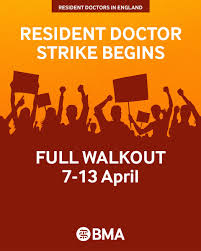
At the centre of this are disputes between doctors and government – particularly around pay, conditions, and workforce sustainability. However, the repeated cycle of disagreement points to something deeper.
This is not just a negotiation issue.
It reflects wider challenges in how the NHS and the broader public sector are funded, structured, and managed over the long term.
While positions remain divided, the impact is being felt by patients.
There is a growing need to move beyond short-term disputes and focus on:
– Restoring stable, reliable patient care
– Rebuilding trust between workforce and government
– Addressing long-term funding and structural sustainability
– Creating a system that works for patients, staff, and the country as a whole
Appointments are being delayed, treatments postponed, and pressure continues to build across the system.
At the centre of this are disputes between doctors and government – particularly around pay, conditions, and workforce sustainability. However, the repeated cycle of disagreement points to something deeper.
This is not just a negotiation issue.
It reflects wider challenges in how the NHS and the broader public sector are funded, structured, and managed over the long term.
While positions remain divided, the impact is being felt by patients.
There is a growing need to move beyond short-term disputes and focus on:
– Restoring stable, reliable patient care
– Rebuilding trust between workforce and government
– Addressing long-term funding and structural sustainability
– Creating a system that works for patients, staff, and the country as a whole
Outcomes
If successful, this could lead to:
– Reduced disruption to patient care and waiting times
– A more stable and supported NHS workforce
– Greater transparency in public sector funding and priorities
– Practical proposals for long-term NHS and public sector reform
– A system that balances fairness, affordability, and performance
– Reduced disruption to patient care and waiting times
– A more stable and supported NHS workforce
– Greater transparency in public sector funding and priorities
– Practical proposals for long-term NHS and public sector reform
– A system that balances fairness, affordability, and performance
Act Now
Join Ideas-Shared, Rate Listing, Share Listing
In Group
Participants will focus on moving beyond symptoms to system-level change. Activity may include:
- Defining the core problems in current public sector funding and allocation
- Reviewing how funding is distributed across healthcare and wider public services
- Identifying inefficiencies, duplication, and areas of poor value
- Exploring alternative funding models used in other countries and sectors
- Assessing the balance between taxation, borrowing, and service delivery
- Examining how workforce pay, conditions, and productivity link to funding structures
- Developing practical proposals for long-term, sustainable public sector financing
- Building coordinated support for a full review and reset of public funding priorities
- Defining the core problems in current public sector funding and allocation
- Reviewing how funding is distributed across healthcare and wider public services
- Identifying inefficiencies, duplication, and areas of poor value
- Exploring alternative funding models used in other countries and sectors
- Assessing the balance between taxation, borrowing, and service delivery
- Examining how workforce pay, conditions, and productivity link to funding structures
- Developing practical proposals for long-term, sustainable public sector financing
- Building coordinated support for a full review and reset of public funding priorities
Status
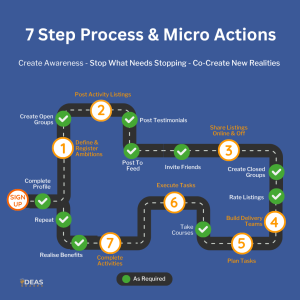
At Step 3 - Group Engagement
Map Reference
Address
British Medical Association, Tavistock Square, St Pancras, London Borough of Camden, Greater London, England, WC1H 9LN, United Kingdom
British Medical Association, Tavistock Square, St Pancras, London Borough of Camden, Greater London, England, WC1H 9LN, United Kingdom
Interest Areas
Links
Public Group Link
Media
Contact Details
Website