
Restore Trust in Public Information
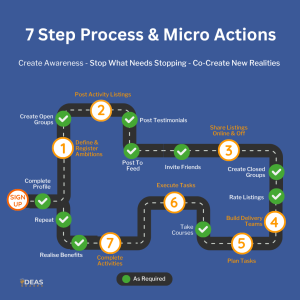
People who care about this issue are not always connected. This space exists to bring those concerned together so they can act collectively. If you are negatively impacted, or if this resonates, and you want to help, have experience or ideas to move this activity forward, then get involved. This isn't a petition or a one-click action. It's an invitation to participate — to help diagnose what's wrong, decide what needs doing, find others who agree, and work together until something real changes. We'll show you how below. Check the Act Now section for simple next steps you can take now. All listings remain active until outcomes are delivered or the listing is no longer required.
Log in to rate this issue and help influence change.
Activity Listing Details
Ambition
To reduce the distortion, bias, and ideological framing of public information by encouraging transparency, accountability, and evidence-based reporting across media and communication channels.
Ambition Type
Cultural, Social, Political
Level
PL4 - National Participation
Goal
Stop What Needs Stopping, Co-Create New Realities
Audience
General Public, Community Leaders & Volunteers, Activists & Advocates, Professionals & Specialists, Creatives & Media, Researchers & Analysts
Situation
Information shapes perception.
Perception shapes decisions.
Across many platforms, including mainstream media, information is often:
- selectively presented
- framed through ideological perspectives
- simplified in ways that distort complexity
At the same time:
- misinformation is widely criticised
- but distortion within accepted channels receives less scrutiny
This creates confusion.
People no longer know:
- what to trust
- what is complete
- what is being omitted
THE CORE PROBLEM
The issue is not only misinformation.
It is also:
👉 the consistent shaping of information in ways that influence interpretation without clear transparency
When this happens:
- trust declines
- division increases
- informed decision-making becomes harder
WHY THIS MATTERS
If trust in information continues to decline:
- public confidence erodes
- polarisation increases
- meaningful discussion becomes more difficult
And ultimately:
The ability to act collectively is weakened.
WHAT NEEDS TO CHANGE
- greater transparency in how information is presented
- clearer distinction between fact, interpretation, and opinion
- accountability for consistent distortion
- improved public understanding of how information is shaped
Perception shapes decisions.
Across many platforms, including mainstream media, information is often:
- selectively presented
- framed through ideological perspectives
- simplified in ways that distort complexity
At the same time:
- misinformation is widely criticised
- but distortion within accepted channels receives less scrutiny
This creates confusion.
People no longer know:
- what to trust
- what is complete
- what is being omitted
THE CORE PROBLEM
The issue is not only misinformation.
It is also:
👉 the consistent shaping of information in ways that influence interpretation without clear transparency
When this happens:
- trust declines
- division increases
- informed decision-making becomes harder
WHY THIS MATTERS
If trust in information continues to decline:
- public confidence erodes
- polarisation increases
- meaningful discussion becomes more difficult
And ultimately:
The ability to act collectively is weakened.
WHAT NEEDS TO CHANGE
- greater transparency in how information is presented
- clearer distinction between fact, interpretation, and opinion
- accountability for consistent distortion
- improved public understanding of how information is shaped
Outcomes
Restore Trust in Public Information by:
1. Clear Separation of Fact, Interpretation, and Opinion
2. Transparent Use of Sources and Data
3. Identification of Distorted or Selective Framing
4. Side-by-Side Comparison of Reporting
5. Increased Public Awareness of Information Bias
6. Greater Accountability for Consistent Misrepresentation
7. More Responsible Sharing of Information
8. Improved Trust Through Better Practice
1. Clear Separation of Fact, Interpretation, and Opinion
2. Transparent Use of Sources and Data
3. Identification of Distorted or Selective Framing
4. Side-by-Side Comparison of Reporting
5. Increased Public Awareness of Information Bias
6. Greater Accountability for Consistent Misrepresentation
7. More Responsible Sharing of Information
8. Improved Trust Through Better Practice
Act Now
Add Review, Join Ideas-Shared, Rate Listing, Share Listing
Status
At Step 3 - Sharing Only
Map Reference
Address
Fleet Street, Blackfriars, City of London, Greater London, England, EC4A 2AG, United Kingdom
Fleet Street, Blackfriars, City of London, Greater London, England, EC4A 2AG, United Kingdom
Interest Areas
Contact Details
Website