
Secure Justice for Northern Ireland Veterans
Those who served should not be forgotten, ignored, or treated unfairly.
People who care about this issue are not always connected. This space exists to bring those concerned together so they can act collectively. If you are negatively impacted, or if this resonates, and you want to help, have experience or ideas to move this activity forward, then get involved. We’ll show you how below. Check the Act Now section below for simple next steps you can take now. Note: All listings remain active until outcomes are either delivered or the listing is no longer required.
Log in to rate this issue and help influence change.
Activity Listing Details
Ambition
To ensure that military veterans who served in Northern Ireland are treated with fairness, dignity, and consistency, and are not subject to unequal legal, political, or societal treatment compared to others involved in the conflict.
Ambition Type
Community, Social, Political
Level
PL4 - National Participation
Goal
Stop What Needs Stopping
Audience
General Public, Engaged Citizens, Activists & Advocates, Politicians & Policy Professionals, Professionals & Specialists
Situation
Something doesn’t sit right.
Men and women who served in Northern Ireland did so under orders, in uniform, representing the state.
Years later, some now face investigation, scrutiny, or legal uncertainty – while others involved in the same conflict are treated differently.
This is not theoretical.
It is lived.
As someone who served during that period, I have seen first-hand the responsibility carried, the environment operated in, and the expectations placed upon those deployed.
For many veterans and their families, this now feels like:
– Unequal treatment
– Lack of recognition
– Ongoing stress and uncertainty
– A sense that their service is being questioned or forgotten
Political decisions have shaped how Northern Ireland veterans are treated.
But on what basis?
Consistent legal principle?
Changing political priorities?
Public pressure?
The need to manage legacy issues in a way that is seen to be acceptable?
If decisions are being made, they must be understood.
If outcomes affect those who served, the rationale must be clear, transparent, and fair.
Right now, many veterans and their families are left asking the same question:
Why are we being treated this way?
If a society asks people to serve, it must also stand by them.
Men and women who served in Northern Ireland did so under orders, in uniform, representing the state.
Years later, some now face investigation, scrutiny, or legal uncertainty – while others involved in the same conflict are treated differently.
This is not theoretical.
It is lived.
As someone who served during that period, I have seen first-hand the responsibility carried, the environment operated in, and the expectations placed upon those deployed.
For many veterans and their families, this now feels like:
– Unequal treatment
– Lack of recognition
– Ongoing stress and uncertainty
– A sense that their service is being questioned or forgotten
Political decisions have shaped how Northern Ireland veterans are treated.
But on what basis?
Consistent legal principle?
Changing political priorities?
Public pressure?
The need to manage legacy issues in a way that is seen to be acceptable?
If decisions are being made, they must be understood.
If outcomes affect those who served, the rationale must be clear, transparent, and fair.
Right now, many veterans and their families are left asking the same question:
Why are we being treated this way?
If a society asks people to serve, it must also stand by them.
How To Help
- Share this with people who served, their families, or anyone who understands the reality on the ground
- Speak up if this affects you or someone you know
- Put real experiences on the table, not second-hand commentary
- Be clear about where treatment feels inconsistent or unjust
Then challenge what is driving decisions:
- Call out where similar cases appear to be treated differently
- Question whether decisions are being applied consistently under the law
- Challenge where political pressure or public narrative may be influencing outcomes
- Highlight where reasoning is unclear, selective, or avoids scrutiny
- Speak up if this affects you or someone you know
- Put real experiences on the table, not second-hand commentary
- Be clear about where treatment feels inconsistent or unjust
Then challenge what is driving decisions:
- Call out where similar cases appear to be treated differently
- Question whether decisions are being applied consistently under the law
- Challenge where political pressure or public narrative may be influencing outcomes
- Highlight where reasoning is unclear, selective, or avoids scrutiny
Outcomes
The cessation of policies that result in unequal or selective treatment of Northern Ireland veterans.
A consistent, transparent framework must be applied equally to all individuals involved in the conflict.
If investigations or legal actions are pursued, they must be:
– Applied without bias
– Based on consistent legal principles
– Balanced across all sides
This ensures that those who served are not treated in isolation, and that fairness is upheld in both principle and practice.
A consistent, transparent framework must be applied equally to all individuals involved in the conflict.
If investigations or legal actions are pursued, they must be:
– Applied without bias
– Based on consistent legal principles
– Balanced across all sides
This ensures that those who served are not treated in isolation, and that fairness is upheld in both principle and practice.
Act Now
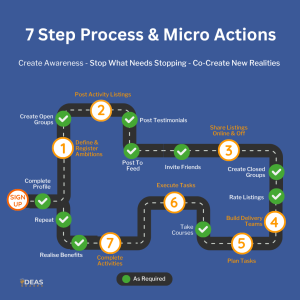
Join Ideas-Shared, Rate Listing, Share Listing
Status
At Step 3 - Sharing Only
Map Reference
Address
Belfast, Belfast City District, County Antrim, Northern Ireland, United Kingdom
Belfast, Belfast City District, County Antrim, Northern Ireland, United Kingdom
Interest Areas
Contact Details
Website