
Trigger a UK Reset Through a General Election
Stability or Reset. Mandate or Momentum. What Comes Next?
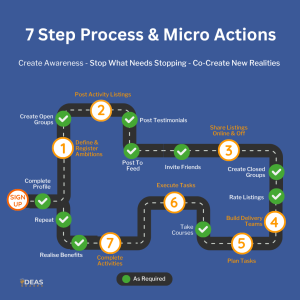
People who care about this issue are not always connected. This space exists to bring those concerned together so they can act collectively. If you are negatively impacted, or if this resonates, and you want to help, have experience or ideas to move this activity forward, then get involved. This isn't a petition or a one-click action. It's an invitation to participate — to help diagnose what's wrong, decide what needs doing, find others who agree, and work together until something real changes. We'll show you how below. Check the Act Now section for simple next steps you can take now. All listings remain active until outcomes are delivered or the listing is no longer required.
Log in to rate this issue and help influence change.
Activity Listing Details
Ambition
To explore whether the United Kingdom should hold a General Election now, or whether alternative approaches would better support stability, effective governance, and long-term national progress.
Ambition Type
Personal, Community, Social, Political
Level
PL5 - Global Participation
Goal
Co-Create New Realities
Audience
General Public, Students, Young People (16-25), Parent & Carers, Retired People, Engaged Citizens, Community Leaders & Volunteers, Activists & Advocates, Faith & Cultural Leaders, Local Government (Councillors & Officers), Politicians & Policy Professionals, Healthcare Professionals, Business Owners & Entrepreneurs, Professionals & Specialists, Trades & Skilled Workers
Situation
The United Kingdom is experiencing ongoing political and economic pressure, alongside growing public dissatisfaction with direction, delivery, and outcomes.
Questions are increasingly being raised about political mandate, leadership effectiveness, and whether the current system is responding adequately to public need.
For some, a General Election represents an opportunity to reset direction, re-establish legitimacy, and give the public a direct voice in what comes next.
For others, an early election risks increasing instability at a time when consistency, delivery, and economic confidence may be more critical.
At the same time, the political landscape is becoming more fragmented, with support spread across multiple parties and no single dominant consensus emerging.
This raises further questions:
– Would an election produce clarity or further division?
– Is the current government able to course-correct without returning to the polls?
– Are there alternative mechanisms for change within the existing system?
This is not only a question of timing, but of strategy, stability, and democratic effectiveness.
Questions are increasingly being raised about political mandate, leadership effectiveness, and whether the current system is responding adequately to public need.
For some, a General Election represents an opportunity to reset direction, re-establish legitimacy, and give the public a direct voice in what comes next.
For others, an early election risks increasing instability at a time when consistency, delivery, and economic confidence may be more critical.
At the same time, the political landscape is becoming more fragmented, with support spread across multiple parties and no single dominant consensus emerging.
This raises further questions:
– Would an election produce clarity or further division?
– Is the current government able to course-correct without returning to the polls?
– Are there alternative mechanisms for change within the existing system?
This is not only a question of timing, but of strategy, stability, and democratic effectiveness.
Outcomes
If explored effectively, this could lead to:
– A clearer understanding of public appetite for a General Election
– Greater awareness of the risks and benefits of early elections
– Identification of viable alternatives to an immediate election
– More informed public discussion around mandate, legitimacy, and governance
– Practical ideas for improving political responsiveness without increasing instability
– A clearer understanding of public appetite for a General Election
– Greater awareness of the risks and benefits of early elections
– Identification of viable alternatives to an immediate election
– More informed public discussion around mandate, legitimacy, and governance
– Practical ideas for improving political responsiveness without increasing instability
Act Now
Join Discussion Group
In Group
Participants will focus on evaluating election timing and alternatives. Activity may include:
- Assessing the pros and cons of holding an immediate General Election
- Exploring risks such as instability, fragmentation, or unclear outcomes
- Examining the concept of political mandate and how it is maintained
- Identifying alternative approaches (leadership changes, policy resets, reforms)
- Reviewing historical examples of early elections and their outcomes
- Discussing what conditions justify returning to the public vote
- Exploring how trust and legitimacy can be strengthened without an election
- Building a framework for when and why elections should be called
- Assessing the pros and cons of holding an immediate General Election
- Exploring risks such as instability, fragmentation, or unclear outcomes
- Examining the concept of political mandate and how it is maintained
- Identifying alternative approaches (leadership changes, policy resets, reforms)
- Reviewing historical examples of early elections and their outcomes
- Discussing what conditions justify returning to the public vote
- Exploring how trust and legitimacy can be strengthened without an election
- Building a framework for when and why elections should be called
Status
At Step 3 - Group Engagement
Map Reference
Address
Palace of Westminster, The Terrace, Westminster, Millbank, City of Westminster, Greater London, England, SW1A 0AA, United Kingdom
Palace of Westminster, The Terrace, Westminster, Millbank, City of Westminster, Greater London, England, SW1A 0AA, United Kingdom
Interest Areas
Links
Public Group Link
Contact Details
Website