
Align the UK and EU to Resolve Core Brexit Issues
Why people voted differently — and why the argument still isn’t honest
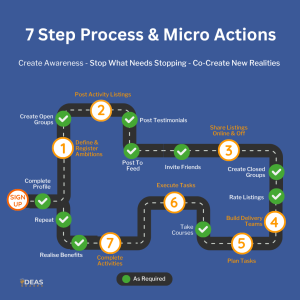
People who care about this issue are not always connected. This space exists to bring those concerned together so they can act collectively. If you are negatively impacted, or if this resonates, and you want to help, have experience or ideas to move this activity forward, then get involved. This isn't a petition or a one-click action. It's an invitation to participate — to help diagnose what's wrong, decide what needs doing, find others who agree, and work together until something real changes. We'll show you how below. Check the Act Now section for simple next steps you can take now. All listings remain active until outcomes are delivered or the listing is no longer required.
Log in to rate this issue and help influence change.
Activity Listing Details
Ambition
To bring clarity to the Brexit debate by explaining why many people supported leaving the EU, highlighting the shift from a trading bloc to a political union, and enabling a more honest, fact-based discussion about future cooperation between the UK and Europe.
Ambition Type
Personal, Community, Cultural, Social, Business, Financial, Economic, Political
Level
PL5 - Global Participation
Goal
Make Others Aware, Stop What Needs Stopping, Co-Create New Realities
Audience
General Public, Students, Young People (16-25), Parent & Carers, Retired People, Engaged Citizens, Community Leaders & Volunteers, Activists & Advocates, Faith & Cultural Leaders, Civil Servants, Local Government (Councillors & Officers), Politicians & Policy Professionals, Public Service Workers (Police, Fire, Social Care etc.), Healthcare Professionals, Educators & Academics, Business Owners & Entrepreneurs, Professionals & Specialists, Trades & Skilled Workers
Situation
Brexit remains one of the most debated and divisive issues in the UK, yet the public conversation is still fragmented and often lacks clarity.
Many people who voted differently did so for different reasons, but these reasons are rarely explained properly.
A key issue is that the European project evolved from a trading bloc into a more politically integrated system, with increasing centralisation, legal complexity, and reduced national control.
This shift was felt by many, but not clearly articulated in mainstream debate.
Instead, the conversation has been dominated by simplified positions, political narratives, and media framing that fail to reflect the full picture.
As a result, the real issue – what form of international cooperation actually works – remains unresolved.
Why This Matters
Without clarity, the same arguments repeat without progress.
This affects:
– Public trust in political systems
– Understanding of international cooperation
– Future UK and European policy direction
– The ability to design better systems that balance cooperation and control
This is not just about Brexit.
It is about how large-scale systems are designed, governed, and held accountable.
What This Article Covers
A personal perspective across generations (joining vs leaving)
The shift from economic cooperation to political integration
Why many people felt something had changed
Where the public debate breaks down
A more balanced view of cooperation vs control
A practical way forward based on trade-focused collaboration
Many people who voted differently did so for different reasons, but these reasons are rarely explained properly.
A key issue is that the European project evolved from a trading bloc into a more politically integrated system, with increasing centralisation, legal complexity, and reduced national control.
This shift was felt by many, but not clearly articulated in mainstream debate.
Instead, the conversation has been dominated by simplified positions, political narratives, and media framing that fail to reflect the full picture.
As a result, the real issue – what form of international cooperation actually works – remains unresolved.
Why This Matters
Without clarity, the same arguments repeat without progress.
This affects:
– Public trust in political systems
– Understanding of international cooperation
– Future UK and European policy direction
– The ability to design better systems that balance cooperation and control
This is not just about Brexit.
It is about how large-scale systems are designed, governed, and held accountable.
What This Article Covers
A personal perspective across generations (joining vs leaving)
The shift from economic cooperation to political integration
Why many people felt something had changed
Where the public debate breaks down
A more balanced view of cooperation vs control
A practical way forward based on trade-focused collaboration
Article
Brexit didn’t end.
It just changed shape.
Years later, the arguments are still happening – often louder, but rarely clearer.
Because the real issue was never properly explained in the first place.
A Personal Perspective
My parents voted to join the European project in the 1970s.
At that time, it made sense.
It was presented as a trading bloc – countries working together economically, reducing barriers, improving prosperity.
I supported that.
But when the Brexit referendum came, I voted to leave.
Not because I rejected cooperation – but because what we had joined had fundamentally changed.
What Changed
The shift was gradual, but significant.
What began as economic cooperation evolved into something far more centralised:
– Increased political integration
– Expanding legal frameworks across member states
– Decision-making moving further away from national control
– Growing layers of governance, complexity, and bureaucracy
It stopped being just about trade.
It became about control.
The Core Issue Most People Felt (But Couldn’t Articulate)
Most people didn’t vote based on detailed policy papers.
They voted based on instinct.
A sense that:
– Decisions felt more distant
– Accountability felt weaker
– Complexity kept increasing
– Outcomes didn’t always reflect everyday reality
That doesn’t make people uninformed.
It means they were reacting to something real – but poorly explained.
Where the Debate Breaks Down
The public conversation has been dominated by extremes:
“Brexit was a disaster”
“Brexit was a complete success”
Neither position reflects reality.
More importantly, neither addresses the underlying question:
– What kind of international cooperation actually works?
A More Honest Position
There is a middle ground – one that rarely gets proper attention:
– Cooperation between countries is essential
– Trade relationships create value
– Shared standards can be beneficial
But:
– Political overreach creates resistance
– Centralised control reduces accountability
– Complexity benefits institutions more than people
A Practical Way Forward
It’s not about re-running the same argument.
It’s about being clear on what worked – and what didn’t.
A future model could be:
– Strong, simple trading relationships
– Clear, limited scope agreements
– National accountability retained
– Cooperation without unnecessary centralisation
In simple terms:
– Work together where it adds value.
– Stop where it doesn’t.
The Role of Media and Politicians
This is where the biggest failure sits.
The public hasn’t been given a clear, balanced explanation of:
– What the EU became
– Why people voted Leave
– What trade-offs actually exist
Instead, the conversation has been:
– Simplified
– Politicised
– Recycled
It’s time for something better.
It’s time this conversation caught up with reality.
Why This Still Matters
Brexit isn’t just about the past.
It’s about how decisions are made going forward:
– In the UK
– Across Europe
– Globally
Because this isn’t unique.
The same tension exists everywhere:
– Local control vs central coordination
Get that balance right – and things work.
Get it wrong – and people push back.
It just changed shape.
Years later, the arguments are still happening – often louder, but rarely clearer.
Because the real issue was never properly explained in the first place.
A Personal Perspective
My parents voted to join the European project in the 1970s.
At that time, it made sense.
It was presented as a trading bloc – countries working together economically, reducing barriers, improving prosperity.
I supported that.
But when the Brexit referendum came, I voted to leave.
Not because I rejected cooperation – but because what we had joined had fundamentally changed.
What Changed
The shift was gradual, but significant.
What began as economic cooperation evolved into something far more centralised:
– Increased political integration
– Expanding legal frameworks across member states
– Decision-making moving further away from national control
– Growing layers of governance, complexity, and bureaucracy
It stopped being just about trade.
It became about control.
The Core Issue Most People Felt (But Couldn’t Articulate)
Most people didn’t vote based on detailed policy papers.
They voted based on instinct.
A sense that:
– Decisions felt more distant
– Accountability felt weaker
– Complexity kept increasing
– Outcomes didn’t always reflect everyday reality
That doesn’t make people uninformed.
It means they were reacting to something real – but poorly explained.
Where the Debate Breaks Down
The public conversation has been dominated by extremes:
“Brexit was a disaster”
“Brexit was a complete success”
Neither position reflects reality.
More importantly, neither addresses the underlying question:
– What kind of international cooperation actually works?
A More Honest Position
There is a middle ground – one that rarely gets proper attention:
– Cooperation between countries is essential
– Trade relationships create value
– Shared standards can be beneficial
But:
– Political overreach creates resistance
– Centralised control reduces accountability
– Complexity benefits institutions more than people
A Practical Way Forward
It’s not about re-running the same argument.
It’s about being clear on what worked – and what didn’t.
A future model could be:
– Strong, simple trading relationships
– Clear, limited scope agreements
– National accountability retained
– Cooperation without unnecessary centralisation
In simple terms:
– Work together where it adds value.
– Stop where it doesn’t.
The Role of Media and Politicians
This is where the biggest failure sits.
The public hasn’t been given a clear, balanced explanation of:
– What the EU became
– Why people voted Leave
– What trade-offs actually exist
Instead, the conversation has been:
– Simplified
– Politicised
– Recycled
It’s time for something better.
It’s time this conversation caught up with reality.
Why This Still Matters
Brexit isn’t just about the past.
It’s about how decisions are made going forward:
– In the UK
– Across Europe
– Globally
Because this isn’t unique.
The same tension exists everywhere:
– Local control vs central coordination
Get that balance right – and things work.
Get it wrong – and people push back.
How To Help
- Share this with people who hold different views on Brexit
- Add your perspective, including why you supported Leave or Remain
- Be specific about what you think worked and what didn’t
- Use real examples, not slogans or generalisations
- Challenge points you disagree with, but explain why clearly
- Avoid repeating arguments that lead nowhere
- Focus on outcomes, not political identity
Then help move the discussion forward:
- Identify where cooperation between the UK and Europe adds value
- Be clear about where control should sit and why
- Highlight practical issues that still need resolving
- Bring in people with experience in trade, law, policy, and governance
- Compare different models of international cooperation
- Turn specific issues into structured activity listings
- Focus on solutions that could actually be implemented
- Keep discussions grounded, balanced, and outcome-focused
- Add your perspective, including why you supported Leave or Remain
- Be specific about what you think worked and what didn’t
- Use real examples, not slogans or generalisations
- Challenge points you disagree with, but explain why clearly
- Avoid repeating arguments that lead nowhere
- Focus on outcomes, not political identity
Then help move the discussion forward:
- Identify where cooperation between the UK and Europe adds value
- Be clear about where control should sit and why
- Highlight practical issues that still need resolving
- Bring in people with experience in trade, law, policy, and governance
- Compare different models of international cooperation
- Turn specific issues into structured activity listings
- Focus on solutions that could actually be implemented
- Keep discussions grounded, balanced, and outcome-focused
Outcomes
– A clearer, more balanced understanding of why Brexit happened
– More honest public discussion based on real drivers, not slogans
– Increased awareness of the trade vs political union distinction
– Engagement from people who want practical, outcome-focused solutions
– Contributions that explore better models for international cooperation
– More honest public discussion based on real drivers, not slogans
– Increased awareness of the trade vs political union distinction
– Engagement from people who want practical, outcome-focused solutions
– Contributions that explore better models for international cooperation
Act Now
Join Discussion Group, Join Ideas-Shared, Rate Listing, Share Listing, Visit Website
Status
At Step 3 - Group Engagement
Map Reference
Address
Council of the European Union, Rue de la Loi - Wetstraat, Quartier des Squares - Wijk van de Squares, European Quarter, Brussels, Brussels-Capital, 1048, Belgium
Council of the European Union, Rue de la Loi - Wetstraat, Quartier des Squares - Wijk van de Squares, European Quarter, Brussels, Brussels-Capital, 1048, Belgium
Interest Areas
Links
Public Group Link
Contact Details
Website