Build a Global Platform for Coordinated Action
A thoughtful exploration of fragmentation, compatibility, localism, and how societies might move forward more honestly.
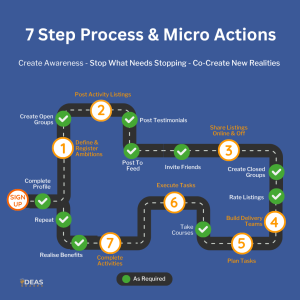
People who care about this issue are not always connected. This space exists to bring those concerned together so they can act collectively. If you are negatively impacted, or if this resonates, and you want to help, have experience or ideas to move this activity forward, then get involved. We’ll show you how below. Check the Act Now section below for simple next steps you can take now. Note: All listings remain active until outcomes are either delivered or the listing is no longer required.
Log in to rate this issue and help influence change.
Activity Listing Details
Ambition
Share and encourage thoughtful discussion about the real outcomes of globalism and integration, and explore more realistic paths forward.
Ambition Type
Cultural, Social
Level
PL5 - Global Participation
Goal
Make Others Aware, Stop What Needs Stopping, Co-Create New Realities
Audience
General Public, Students, Young People (16-25), Parent & Carers, Retired People, Engaged Citizens, Activists & Advocates, Local Government (Councillors & Officers), Politicians & Policy Professionals, Educators & Academics, Business Owners & Entrepreneurs, Researchers & Analysts
Situation
Over the past few decades, globalism and social integration were widely presented as pathways to shared prosperity, cultural exchange, and international cooperation.
While these goals were well intentioned, the lived experience for many people has been very different.
Across many societies we now see:
• rising inequality
• loss of local industries
• cultural tensions
• declining trust in institutions
• growing political polarisation
These developments raise an important question:
Did globalism and integration fail in practice, and if so, why?
This article explores those questions and considers whether a different balance between local strength and voluntary cooperation might offer a more stable path forward.
While these goals were well intentioned, the lived experience for many people has been very different.
Across many societies we now see:
• rising inequality
• loss of local industries
• cultural tensions
• declining trust in institutions
• growing political polarisation
These developments raise an important question:
Did globalism and integration fail in practice, and if so, why?
This article explores those questions and considers whether a different balance between local strength and voluntary cooperation might offer a more stable path forward.
Article
When Globalism and Integration Fail
What went wrong – and what might work better
For many years we were told the world was becoming more connected.
Countries would trade more.
People would move more freely.
Cultures would mix.
And everyone would benefit.
This idea became known as globalism.
At the same time, societies were encouraged to become more integrated. Different cultures would live together and build shared communities.
In theory, it sounded like progress.
But for many people, the reality felt very different.
Across many countries today we see:
• rising inequality
• loss of local industries
• growing cultural tension
• falling trust in governments and institutions
• increasing political division
So it is reasonable to ask an honest question:
Did globalism and integration work the way we hoped they would?
Understanding what happened matters. Not because cooperation between countries is a bad thing, but because the way cooperation is organised matters a lot.
Where globalism went wrong
Globalism simply means the world becoming more connected.
Trade increased.
Companies operated across borders.
Ideas and technology spread quickly.
Some good things did happen. Many countries developed faster and millions of people moved out of poverty.
But the system that developed also created serious problems.
In many places, local industries disappeared as companies moved production to cheaper countries. Communities that once had stable jobs lost their economic foundations.
Wealth became concentrated in large cities and among global corporations.
For many ordinary people, globalism did not feel like shared prosperity.
It felt like being left behind.
At the same time, decisions affecting people's lives often seemed to be made far away — by international organisations, large corporations, or distant governments.
When people feel they have no influence over the systems shaping their lives, frustration naturally grows.
The challenge of integration
As the world became more connected, many societies also became more culturally diverse.
Integration was supposed to bring people together.
The idea was simple: different cultures could live side by side while sharing common rules and values.
Sometimes this worked well.
But in many places the process was more difficult than expected.
Some policies pushed newcomers to abandon their own cultures completely. Others avoided discussing cultural differences at all, assuming harmony would happen automatically.
Both approaches created problems.
In some cities, communities became separated rather than integrated. People lived close to each other but remained socially and economically divided.
Political arguments about immigration, identity, and belonging became increasingly intense.
One important issue is rarely discussed openly.
Compatibility matters.
Integration assumes that people share enough common values and expectations to live comfortably together.
But sometimes values, traditions, and lifestyles differ more than expected. Ignoring those differences does not create harmony. It can create tension.
Acknowledging this reality is not prejudice. It is simply honesty.
In some cases, peaceful coexistence with respectful distance may work better than forcing communities together in ways that create constant conflict.
Strengthening communities first
If global systems feel unstable, one possible solution is to rebuild strength at the local level.
Strong communities tend to be more resilient and more confident about working with others.
A healthy community usually has:
• a stable local economy
• people involved in local decision making
• respect for local culture and identity
• citizens who feel they have some control over their future
When communities feel secure, cooperation with other regions or countries becomes much easier.
Global cooperation works best when strong communities choose to work together.
It works far less well when cooperation feels imposed from above.
Rethinking what success means
For many years governments measured success mainly through economic growth.
If the economy grew, the system was considered successful.
But economic growth alone does not guarantee a healthy society.
Many people now believe success should also include:
• wellbeing and quality of life
• fairness and opportunity
• environmental sustainability
• meaningful work
• trust between people and institutions
A society is not healthy simply because it produces more wealth.
It is healthy when people feel secure, respected, and able to participate in shaping their lives.
Living with differences
Diversity can bring strength to a society. Different ideas, experiences, and cultures can create innovation and resilience.
But diversity works best when societies accept an important truth:
Unity does not require everyone to be the same.
A mature society allows people to maintain their identities while still participating in a shared civic system.
Healthy pluralism includes:
• representation of different voices in public life
• open conversations between communities
• fair political participation
• honest recognition of past mistakes and grievances
At the same time, societies must recognise that not all values will always align perfectly.
Being honest about those limits allows differences to be managed realistically rather than ignored.
Rebuilding trust in institutions
One reason many people have become sceptical about global systems is a growing sense of powerlessness.
People feel that decisions affecting their lives are made without their involvement.
Restoring trust requires giving people meaningful ways to participate.
This might include:
• citizen assemblies
• participatory budgeting
• stronger local governance
• transparent government decision making
• digital platforms that allow citizens to contribute ideas
When people feel heard, they are far more willing to support cooperation and compromise.
Learning from places that work
Despite the challenges, many societies have found ways to balance diversity, development, and community strength.
For example:
Kerala in India has built strong education and healthcare systems while maintaining local democratic participation.
Barcelona has experimented with community-led economic initiatives and participatory budgeting.
Canada has attempted to build a multicultural society that recognises cultural differences while maintaining shared institutions.
Rwanda has rebuilt trust after devastating conflict through community dialogue and reconciliation efforts.
These examples show that societies can succeed when they combine local strength with cooperative institutions.
The role of younger generations
Young people will shape the future of cooperation between societies.
Helping them succeed means providing:
• education that encourages critical thinking
• opportunities to participate in civic life
• access to technology and information
• space to discuss ideas openly
Young people are already leading initiatives around climate change, social justice, and community development.
Supporting those efforts will help build more stable societies in the future.
Moving forward
The problems associated with globalism and integration do not mean cooperation between societies is impossible.
They simply show that the systems used to organise cooperation must evolve.
A more stable future may depend on several key principles:
• strong local communities
• voluntary cooperation between societies
• fair economic systems
• respect for cultural identity
• institutions that allow citizens to participate in decisions
Cooperation works best when it grows from stable foundations.
Strong communities choosing to work together will always be more resilient than systems imposed from above.
The future may not lie in choosing between nationalism and globalism.
It may lie in finding a better balance between local strength and global cooperation.
When that balance is right, societies can collaborate while still preserving the diversity and independence that make the world rich and interesting.
Questions worth exploring together
The issues raised here are complex, and reasonable people may disagree about many aspects of them.
But honest discussion is often the first step toward better solutions.
Some questions worth exploring include:
• How can societies balance cultural diversity with social cohesion?
• What level of shared values is necessary for stable integration?
• How can communities rebuild economic security in an interconnected world?
• What role should local decision making play in global cooperation?
• How can citizens participate more meaningfully in shaping the systems that affect their lives?
There may not be simple answers to these questions.
But thoughtful discussion can help societies move from frustration and polarisation toward more constructive paths forward.
If this topic interests you, you are welcome to join the conversation.
What went wrong – and what might work better
For many years we were told the world was becoming more connected.
Countries would trade more.
People would move more freely.
Cultures would mix.
And everyone would benefit.
This idea became known as globalism.
At the same time, societies were encouraged to become more integrated. Different cultures would live together and build shared communities.
In theory, it sounded like progress.
But for many people, the reality felt very different.
Across many countries today we see:
• rising inequality
• loss of local industries
• growing cultural tension
• falling trust in governments and institutions
• increasing political division
So it is reasonable to ask an honest question:
Did globalism and integration work the way we hoped they would?
Understanding what happened matters. Not because cooperation between countries is a bad thing, but because the way cooperation is organised matters a lot.
Where globalism went wrong
Globalism simply means the world becoming more connected.
Trade increased.
Companies operated across borders.
Ideas and technology spread quickly.
Some good things did happen. Many countries developed faster and millions of people moved out of poverty.
But the system that developed also created serious problems.
In many places, local industries disappeared as companies moved production to cheaper countries. Communities that once had stable jobs lost their economic foundations.
Wealth became concentrated in large cities and among global corporations.
For many ordinary people, globalism did not feel like shared prosperity.
It felt like being left behind.
At the same time, decisions affecting people's lives often seemed to be made far away — by international organisations, large corporations, or distant governments.
When people feel they have no influence over the systems shaping their lives, frustration naturally grows.
The challenge of integration
As the world became more connected, many societies also became more culturally diverse.
Integration was supposed to bring people together.
The idea was simple: different cultures could live side by side while sharing common rules and values.
Sometimes this worked well.
But in many places the process was more difficult than expected.
Some policies pushed newcomers to abandon their own cultures completely. Others avoided discussing cultural differences at all, assuming harmony would happen automatically.
Both approaches created problems.
In some cities, communities became separated rather than integrated. People lived close to each other but remained socially and economically divided.
Political arguments about immigration, identity, and belonging became increasingly intense.
One important issue is rarely discussed openly.
Compatibility matters.
Integration assumes that people share enough common values and expectations to live comfortably together.
But sometimes values, traditions, and lifestyles differ more than expected. Ignoring those differences does not create harmony. It can create tension.
Acknowledging this reality is not prejudice. It is simply honesty.
In some cases, peaceful coexistence with respectful distance may work better than forcing communities together in ways that create constant conflict.
Strengthening communities first
If global systems feel unstable, one possible solution is to rebuild strength at the local level.
Strong communities tend to be more resilient and more confident about working with others.
A healthy community usually has:
• a stable local economy
• people involved in local decision making
• respect for local culture and identity
• citizens who feel they have some control over their future
When communities feel secure, cooperation with other regions or countries becomes much easier.
Global cooperation works best when strong communities choose to work together.
It works far less well when cooperation feels imposed from above.
Rethinking what success means
For many years governments measured success mainly through economic growth.
If the economy grew, the system was considered successful.
But economic growth alone does not guarantee a healthy society.
Many people now believe success should also include:
• wellbeing and quality of life
• fairness and opportunity
• environmental sustainability
• meaningful work
• trust between people and institutions
A society is not healthy simply because it produces more wealth.
It is healthy when people feel secure, respected, and able to participate in shaping their lives.
Living with differences
Diversity can bring strength to a society. Different ideas, experiences, and cultures can create innovation and resilience.
But diversity works best when societies accept an important truth:
Unity does not require everyone to be the same.
A mature society allows people to maintain their identities while still participating in a shared civic system.
Healthy pluralism includes:
• representation of different voices in public life
• open conversations between communities
• fair political participation
• honest recognition of past mistakes and grievances
At the same time, societies must recognise that not all values will always align perfectly.
Being honest about those limits allows differences to be managed realistically rather than ignored.
Rebuilding trust in institutions
One reason many people have become sceptical about global systems is a growing sense of powerlessness.
People feel that decisions affecting their lives are made without their involvement.
Restoring trust requires giving people meaningful ways to participate.
This might include:
• citizen assemblies
• participatory budgeting
• stronger local governance
• transparent government decision making
• digital platforms that allow citizens to contribute ideas
When people feel heard, they are far more willing to support cooperation and compromise.
Learning from places that work
Despite the challenges, many societies have found ways to balance diversity, development, and community strength.
For example:
Kerala in India has built strong education and healthcare systems while maintaining local democratic participation.
Barcelona has experimented with community-led economic initiatives and participatory budgeting.
Canada has attempted to build a multicultural society that recognises cultural differences while maintaining shared institutions.
Rwanda has rebuilt trust after devastating conflict through community dialogue and reconciliation efforts.
These examples show that societies can succeed when they combine local strength with cooperative institutions.
The role of younger generations
Young people will shape the future of cooperation between societies.
Helping them succeed means providing:
• education that encourages critical thinking
• opportunities to participate in civic life
• access to technology and information
• space to discuss ideas openly
Young people are already leading initiatives around climate change, social justice, and community development.
Supporting those efforts will help build more stable societies in the future.
Moving forward
The problems associated with globalism and integration do not mean cooperation between societies is impossible.
They simply show that the systems used to organise cooperation must evolve.
A more stable future may depend on several key principles:
• strong local communities
• voluntary cooperation between societies
• fair economic systems
• respect for cultural identity
• institutions that allow citizens to participate in decisions
Cooperation works best when it grows from stable foundations.
Strong communities choosing to work together will always be more resilient than systems imposed from above.
The future may not lie in choosing between nationalism and globalism.
It may lie in finding a better balance between local strength and global cooperation.
When that balance is right, societies can collaborate while still preserving the diversity and independence that make the world rich and interesting.
Questions worth exploring together
The issues raised here are complex, and reasonable people may disagree about many aspects of them.
But honest discussion is often the first step toward better solutions.
Some questions worth exploring include:
• How can societies balance cultural diversity with social cohesion?
• What level of shared values is necessary for stable integration?
• How can communities rebuild economic security in an interconnected world?
• What role should local decision making play in global cooperation?
• How can citizens participate more meaningfully in shaping the systems that affect their lives?
There may not be simple answers to these questions.
But thoughtful discussion can help societies move from frustration and polarisation toward more constructive paths forward.
If this topic interests you, you are welcome to join the conversation.
Outcomes
If more people engage honestly with topics like this, it could help:
• encourage more open and mature public discussion
• reduce polarisation through clearer understanding of competing perspectives
• identify more realistic approaches to cooperation between communities and nations
• rebuild trust by allowing difficult topics to be discussed openly
• inspire new ideas for balancing local strength with global collaboration
• encourage more open and mature public discussion
• reduce polarisation through clearer understanding of competing perspectives
• identify more realistic approaches to cooperation between communities and nations
• rebuild trust by allowing difficult topics to be discussed openly
• inspire new ideas for balancing local strength with global collaboration
Act Now
Add Review, Join Ideas-Shared, Rate Listing, Share Listing, Visit Website
Status
At Step 3 - Sharing Only
Map Reference
Address
Royal Observatory Greenwich, Blackheath Avenue, Greenwich Town Centre, East Greenwich, Royal Borough of Greenwich, Greater London, England, SE10 8XJ, United Kingdom
Royal Observatory Greenwich, Blackheath Avenue, Greenwich Town Centre, East Greenwich, Royal Borough of Greenwich, Greater London, England, SE10 8XJ, United Kingdom
Media
File Upload
Contact Details
Website
Listing Outcomes
What Did This Listing Achieve?
Still underway as at January 2026.