End the Normalisation of Civilian Death
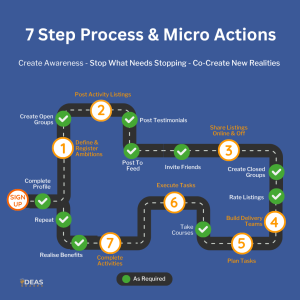
People who care about this issue are not always connected. This space exists to bring those concerned together so they can act collectively. If you are negatively impacted, or if this resonates, and you want to help, have experience or ideas to move this activity forward, then get involved. We’ll show you how below. Check the Act Now section below for simple next steps you can take now. Note: All listings remain active until outcomes are either delivered or the listing is no longer required.
Log in to rate this issue and help influence change.
Activity Listing Details
Ambition
To challenge and reduce the acceptance of civilian deaths across all forms of conflict and violence, and to build coordinated action that treats every loss of life as unacceptable rather than inevitable.
Ambition Type
Personal, Community, Cultural, Social, Political
Level
PL5 - Global Participation
Goal
Make Others Aware, Stop What Needs Stopping, Co-Create New Realities
Audience
General Public, Students, Young People (16-25), Parent & Carers, Retired People, Engaged Citizens, Community Leaders & Volunteers, Activists & Advocates, Faith & Cultural Leaders, Politicians & Policy Professionals
Situation
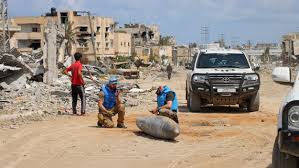
Across conflicts and societies, civilian deaths are reported daily.
Recent data shows that over 100,000 civilians are killed annually in armed conflicts, with some estimates from 2024 indicating a 40% surge in deaths, amounting to at least 48,384 documented civilian casualties – or one every 12 minutes. Other reports suggest over 200,000 to 240,000 total annual deaths from armed violence.
Locations change. Contexts differ.
But the pattern remains:
– men, women, and children lose their lives
– headlines move on quickly
– narratives form around justification, blame, or strategy
Over time, this creates a dangerous shift.
Loss of life becomes:
– expected
– explained
– absorbed into the background
This applies not only to war, but also to:
– terrorism
– knife crime
– other forms of violence
Different causes. Same outcome.
Lives lost.
Normalisation follows.
THE CORE PROBLEM
We have become conditioned to process death as information rather than reality.
Discussion focuses on:
– who is responsible
– which side is justified
– what the wider implications are
But rarely on a shared, non-negotiable position that the loss of civilian life is unacceptable.
Without that foundation:
– narratives divide
– accountability weakens
– repetition continues
WHY THIS MATTERS
If this continues:
– societal tolerance of violence increases
– division deepens
– human impact becomes secondary to narrative
– apologies become excuses
And critically the value placed on life becomes conditional.
WHAT NEEDS TO CHANGE
– re-establish a clear, shared principle: civilian deaths are not acceptable
– shift focus from justification to prevention
– increase accountability across all contexts
– build coordinated efforts that prioritise protection of life
Recent data shows that over 100,000 civilians are killed annually in armed conflicts, with some estimates from 2024 indicating a 40% surge in deaths, amounting to at least 48,384 documented civilian casualties – or one every 12 minutes. Other reports suggest over 200,000 to 240,000 total annual deaths from armed violence.
Locations change. Contexts differ.
But the pattern remains:
– men, women, and children lose their lives
– headlines move on quickly
– narratives form around justification, blame, or strategy
Over time, this creates a dangerous shift.
Loss of life becomes:
– expected
– explained
– absorbed into the background
This applies not only to war, but also to:
– terrorism
– knife crime
– other forms of violence
Different causes. Same outcome.
Lives lost.
Normalisation follows.
THE CORE PROBLEM
We have become conditioned to process death as information rather than reality.
Discussion focuses on:
– who is responsible
– which side is justified
– what the wider implications are
But rarely on a shared, non-negotiable position that the loss of civilian life is unacceptable.
Without that foundation:
– narratives divide
– accountability weakens
– repetition continues
WHY THIS MATTERS
If this continues:
– societal tolerance of violence increases
– division deepens
– human impact becomes secondary to narrative
– apologies become excuses
And critically the value placed on life becomes conditional.
WHAT NEEDS TO CHANGE
– re-establish a clear, shared principle: civilian deaths are not acceptable
– shift focus from justification to prevention
– increase accountability across all contexts
– build coordinated efforts that prioritise protection of life
Outcomes
- Establish a clear global principle that civilian deaths are unacceptable
- Increase visibility and understanding of civilian impact across all contexts
- Shift narratives from justification to prevention
- Improve accountability where civilian harm occurs
- Strengthen focus on protecting life in both conflict and domestic settings
- Build coordinated efforts that prioritise reduction of violence
If loss of life becomes normal, it will continue.
If it is consistently challenged, it can change.
- Increase visibility and understanding of civilian impact across all contexts
- Shift narratives from justification to prevention
- Improve accountability where civilian harm occurs
- Strengthen focus on protecting life in both conflict and domestic settings
- Build coordinated efforts that prioritise reduction of violence
If loss of life becomes normal, it will continue.
If it is consistently challenged, it can change.
Act Now
Join Ideas-Shared, Offer Funding, Offer Resources, Rate Listing, Share Listing
Status
At Step 3 - Sharing Only
Map Reference
Address
International Federation of Red Cross Red Crescent, 17, Chemin des Crêts, Le Petit-Saconnex, Petit-Saconnex et Servette, Geneva, 1209, Switzerland
International Federation of Red Cross Red Crescent, 17, Chemin des Crêts, Le Petit-Saconnex, Petit-Saconnex et Servette, Geneva, 1209, Switzerland
Interest Areas
Contact Details
Website